

The Opposites in Music
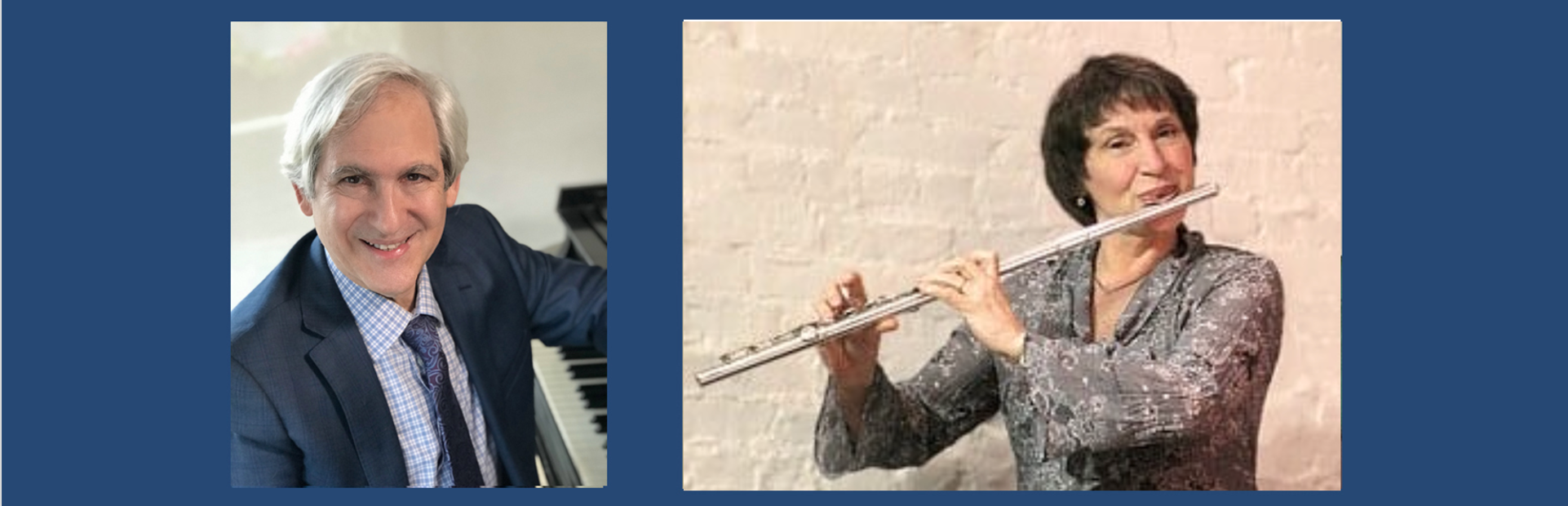
Taught by Barbara Allen and Edward Green, PhD.
Alternate Sundays, 4:00 – 5:30 PM Eastern Time (USA)
Fall 2026 classes via video conference are now in session.
FALL 2026
This semester we’ll be studying Eli Siegel’s ground-breaking 1951 lecture Aesthetic Realism and Music. In it he shows that music in its very technique resolves the everyday conflicts we have. And in a grand and passionate way, music also tells us what we have in common with reality itself. “The world, art, and self explain each other,” stated Eli Siegel, “each is the aesthetic oneness of opposites.”
Through music from across the globe—traditional, popular and classical, and across the centuries—we’ll see evidence for the truth of that great principle.
We can ask: Do the way notes in a beautiful melody agree with each other and disagree stand for the ethics we want in our lives—in our thoughts, moment-by-moment? And can we learn from harmony? —how chords affirm the home key while also taking exciting enriching trips to other keys. Does that have a message for our lives?
“The resolution of conflict in self,” stated Eli Siegel, “is like the making one of opposites in art.” That will be our guiding principle in every class. And he continued, “We’ll never be through finding out what that motto is. It will be the happy drift of one’s life.”
And in his lecture Mr. Siegel looks in a surprising way—with wonderful, earthy immediacy—at terms from Robert Illing’s Dictionary of Music [1950] and shows how each of these technical aspects of music stands for the good sense we want!
We begin with:
- Sep 27 Discord & Concord: in Stravinsky, Chopin, Rock, & Yes! Palestrina, Too
“The whole history of music has been a history of discord and concord. And the histories of lives are likewise histories of discord and concord.”
- Oct 11 Do Notes, Like Us, Have Inner Lives—Both For & Against Themselves?
“How…a thing can seem to be against itself and for itself in the field of music, and how in its being against itself it is also for itself, is a hard problem. But it is akin to the problem we have, because we are against ourselves and also for ourselves.”
- Oct 25 The Rondo Tells Us Who We Are
“There is a delightful kind of music called the rondo; and this is a philosophic matter too…that something which began a certain way changed into other material; but then through the other material, came back to what it was, presumably refreshed….Assuming that we are the early material of the rondo….”
- Nov 8 Harmony in Music Proves a Fight Can Be Beautiful—& For Life!
“Then, we have the matter of major key and minor key. One would expect that the major key would fight the minor and we’d have a fine instance of delinquency, because that’s what happens in people….But in music…the struggle seems to be a struggle for harmony in the midst of variegated excitement.”
- Nov 22 Is All Music, At Once, Abstract & Filled with Personal Emotion?
“All music, even a dance, is something of the abstract or absolute. Yet it can be shown that music, no matter how polyphonic, how seemingly crystallized in pure form it may be, also has its personal relevance.”
- Dec 6 Romanticism in Music: the Self Comes into Its Own!
“What happens towards the end of the 18th century?: Beethoven (and I can tell you privately, Mozart too) suddenly saying, “The world has been without self too much! We’re romantic composers, and we’re going to get the self in, Buxtehude to the contrary!” So they did—particularly Beethoven. Because everybody in hearing a Beethoven symphony has felt his self was being rolled in a blanket in heaven.”
- Dec 20 Music, the World, & Ourselves: Students in the Class Present Papers
Want to audit a class?
- Contact the registrar at 212.777.5055, Mon–Fri, 2–6 PM (ET) or submit this brief form. Be sure to make your request at least 2 days before the class.
- Once your request has been approved, you will receive an email with a link to pay for the class.
Fees
- Semester (7 classes): $60
- Audit (per class): $12