

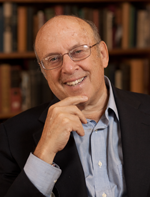
Jeffrey Carduner, Aesthetic Realism consultant, writes:
How much do we need to know what poetry is and can mean to us? Is poetry some distant thing, or is it crucial for our lives? “Knowledge and Feeling, as One”—this latest issue of TRO—shows that it’s urgent (and thrilling) to learn what makes for poetry that’s the real thing. Here, in a section of a 1951 talk, we have the big experience of seeing Eli Siegel—prize-winning poet and great philosopher and critic—discuss three of his own poems. He does this so movingly, with clarity and also humor. And I, Aesthetic Realism consultant Jeffrey Carduner, say too: I respect very much how TRO’s editor, Ellen Reiss, expresses her opinion of Mr. Siegel, with exactitude, perspective, and passion. I believe the centuries will agree with her. —Here, then, is the new issue of The Rightness of Aesthetic Realism: A Periodical.
The commentary by Ellen Reiss begins:
Dear Unknown Friends:
Here is part 2 in our 6-part serialization of the powerful, kind, glowing talk by Eli Siegel titled Technique and My Poems. He gave the first half of it on Wednesday, November 28, 1951, and the rest a week later. The audience of then was men and women who studied in the poetry classes he taught; and perhaps there were, too, people present who studied in the other Aesthetic Realism classes he taught. But even in those early years of Aesthetic Realism, one could rightly say about Mr. Siegel what Ben Jonson said of Shakespeare: “He was not of an age, but for all time!” In 1951, the Aesthetic Realism curriculum was composed of thrilling ground-breaking classes, taught by Mr. Siegel, on such subjects as history, philosophy, all the arts, ethics, mind itself and the confusions and hopes of human beings.
A Landmark Lecture Comes to Be
One can surmise that students of Mr. Siegel who cared much for his poetry, and had heard him speak on poets of many places and times, requested that he speak about his own poems and what he was going after in them. As I described last month, I think another large impetus behind this talk was the important letter the poet William Carlos Williams had written earlier that November. In it, Dr. Williams says, very carefully, about Eli Siegel, “He belongs in the very first rank of our living artists”; and about Mr. Siegel’s poems, “This is powerful evidence of a new track….The evidence is technical but it comes out at the non-technical level as either great pleasure to the beholder, a deeper taking of the breath, a feeling of cleanliness, which is the sign of the truly new.”
And so, in late 1951, Eli Siegel spoke about his own poetry. And it was as no poet had ever spoken about his or her own poetry before….Read more